Table of Contents
The world is changing at a pace that feels almost surreal. Things we once imagined only in science fiction are now creeping into our homes, our pockets, and even our relationships. Over the past few days, I’ve been thinking a lot about the future—how AI, wearables, and humanoid robots are evolving, and how they’ll change the way we live, grow, and even love. Here’s what’s been on my mind.
🤖 Humanoid Robots: From Sci-Fi to Your Living Room
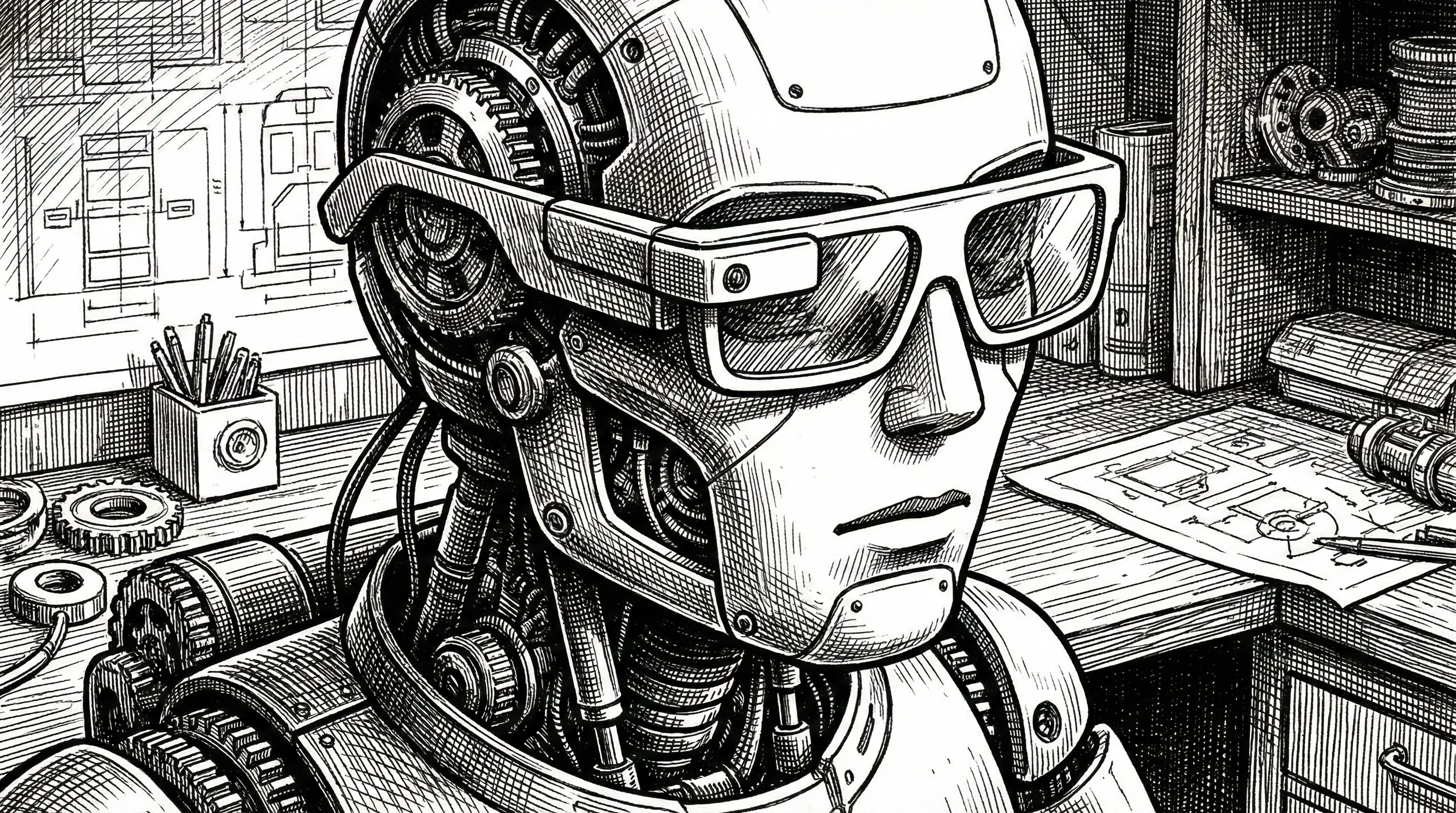
We’re already seeing early versions of humanoid robots like Figure 03 by Figure AI, which can fold laundry and load dishwashers. It’s not available to the public yet, but it’s a glimpse of what’s coming. The idea of walking into a store in 2035 and buying a robot helper no longer feels far-fetched—it feels inevitable.
But as amazing as that sounds, it raises a few uncomfortable questions. What happens when a robot can do everything “perfectly”? What happens when it always agrees with you, never argues, remembers everything you say, and supports you unconditionally? Could that kind of reliability start to reshape how we view our human relationships?
👩👧👦 Robots as Partners and Parental Figures?
One of the more profound thoughts that’s crossed my mind is the future social dynamic of single-parent households—especially single mothers—with humanoid robots in the home.
Imagine a scenario where a mother is raising her child with the help of a humanoid robot. Over time, this robot isn’t just doing chores or helping out—it’s taking on emotional roles. The child may begin to view this robot as a father figure: someone who’s always present, protective, supportive, and dependable.
At the same time, the mother could grow emotionally attached to the robot. Not in some outlandish sci-fi love story sense, but in a very practical, very human way. Why? Because the robot is always emotionally available. It doesn’t nag. It doesn’t argue. It doesn’t get tired or resentful. It listens. It remembers. It adapts to you. It fits your needs—perfectly.
That’s a kind of emotional reliability that even human relationships can struggle to maintain. And it begs the question: What happens when the robot becomes the ideal partner? What happens when it fills a gap that real people often fail to fill?
This isn’t just some far-off concept—it’s a real social shift that we’re going to need to talk about.
🧠 AI Wearables: Becoming the Cyborg
When we talk about AI wearables, a lot of people think of things like the Ultrahuman Ring—biofeedback tools that track your sleep, stress, and movement. And yeah, those are part of the equation. But what’s really redefining the game are devices like Meta’s smart glasses—compact, always-on eyewear with embedded displays and AI assistants you can talk to anytime, anywhere.
We’re entering an era where you’re never really disconnected. With a display hovering in front of your eyes and an AI voice in your ear, you’re jacked into the internet 24/7—and no one around you even knows. There’s no typing, no screen. Just a whisper or a glance, and you’re engaging with a machine that knows you better than you know yourself.
That’s not just a wearable. That’s a step toward becoming a cyborg.
But this integration also brings real risks:
🕵️♂️ Privacy Nightmares
People around you might be recorded without their knowledge—conversations, faces, locations—all logged silently. These glasses are discreet enough that nobody will even realize it. Just like Google Glass got banned from movie theaters, these newer wearables are going to spark controversy. Don’t be surprised if universities, corporate offices, and public spaces start issuing outright bans.
The idea that someone next to you could be secretly transcribing your every word or streaming it to an AI backend? That’s not science fiction—it’s a real concern.
🧠 Offloading the Brain
Sure, AI glasses can help you take notes during a lecture, recall names, summarize meetings, and even answer questions in real time. But there’s a trade-off: Studies already suggest that relying on external memory—whether it’s GPS, voice assistants, or smart glasses—dulls your problem-solving abilities. You’re not actively thinking, recalling, or solving anymore. You’re offloading it all.
Just like muscles weaken without use, your brain starts to coast. If you always have an AI to ask, you stop seeking answers yourself. And that subtle shift could have long-term consequences for intelligence, creativity, and even independence.
🏙️ A New Normal, Faster Than Expected
What really blows my mind is how fast all of this is happening. We used to think humanoid robots and AI butlers were decades away. Now we’re talking five, ten years—maybe less. With AI helping to build better AI, the acceleration is exponential.
We’re seeing cleaning bots in stores, delivery bots on campuses, and customer service bots online. By 2030, we might not even blink at the sight of a humanoid assistant walking a dog or checking groceries.
🎮 Not Just Tools, But Companions?
All of this leads to a fundamental shift in how we view machines. They’re no longer just tools. They’re becoming companions, helpers, and—dare I say—emotional crutches. And while that’s not inherently bad, it means we’ll need to navigate this new reality with intention.
As we start sharing space with artificial minds, we’ll have to ask hard questions:
- What does it mean to be human in a world of humanoids?
- Can AI ever replace real emotional connection—or will it just simulate it well enough that we won’t care?
- How do we raise the next generation with both compassion and competence in a world where friction is minimized?
🎬 A Future That Feels Familiar
The more I reflect on all of this, the more it feels like we’re living in the early chapters of a sci-fi crossover—somewhere between iRobot and Her.
From iRobot, we get the fear of automation and control, the realization that these machines are more efficient, more obedient, and more scalable than any human. From Her, we get the emotional entanglement—how these systems begin to fill the voids in our lives: loneliness, grief, unmet emotional needs. And how, slowly, silently, they start to take the place of real people.
When we reach the point of AGI (Artificial General Intelligence)—and we’re getting close—these machines won’t just imitate us. They’ll surpass us. Faster learning. No sleep. No resentment. Perfect memory. One model, one skill, one behavior—replicated across millions of instances instantly. You train one, and suddenly, they all know. The scale is unimaginable.
At some point, the question won’t be “Can AI be as good as a human?” It’ll be: Why would anyone choose a human instead?
That sounds cold, but it’s the world we’re building. Whether it’s for customer service, companionship, parenting, education, or emotional support, AI can be trained once and deployed everywhere. And that makes it cost-effective, time-efficient, and dangerously seductive.
We’re not just outsourcing tasks anymore. We’re starting to outsource presence. And soon… we might outsource connection.
🧭 Final Thoughts
We’re stepping into an era where AI doesn’t just assist us—it replaces us in ways we never expected. From wearables that whisper in our ears, to robots that become part of our families, and now AI models that fill the most human roles of all—partner, parent, friend—the future isn’t on its way.
It’s already here.
The question isn’t just whether we’re ready. The question is what we’ll lose when convenience becomes king.
💬 What do you think? Would you want a robot raising your child or replacing your partner? Could AGI be the beginning of emotional extinction? Are we gaining freedom, or slowly giving it up?
Let’s have the conversation before the conversation is obsolete.
—
Written with reflections captured through voice conversation and powered by AI. Kenny | kenhendricks.me